Why Private Estates Are the New Standard for Wellness Retreats in South Florida
For years, the wellness retreat conversation belonged to resorts. Branded spa programs, marble lobbies, manicured pool decks, and scheduled yoga. In 2026, that model is quietly losing its grip — and a different kind of space is taking over.
Private estates are becoming the new standard for wellness retreats in South Florida. Not because they’re trendier. Because they actually solve what guests show up for: privacy, presence, and a setting that doesn’t perform.
What “Wellness Retreat” Means in 2026
A wellness retreat in 2026 is less about treatments and more about regulation. Travelers are arriving with depleted nervous systems, fractured sleep, and a layered fatigue that no facial can address. They aren’t booking time away to be entertained — they’re booking it to come back to themselves.
That shift has changed what guests look for in a venue. The wellness industry refers to it as the shift from destination-led to intention-led travel. What it really means is simple: the environment now does most of the work.
And environments built for crowds — even luxurious ones — cannot deliver what an environment built for one group can.
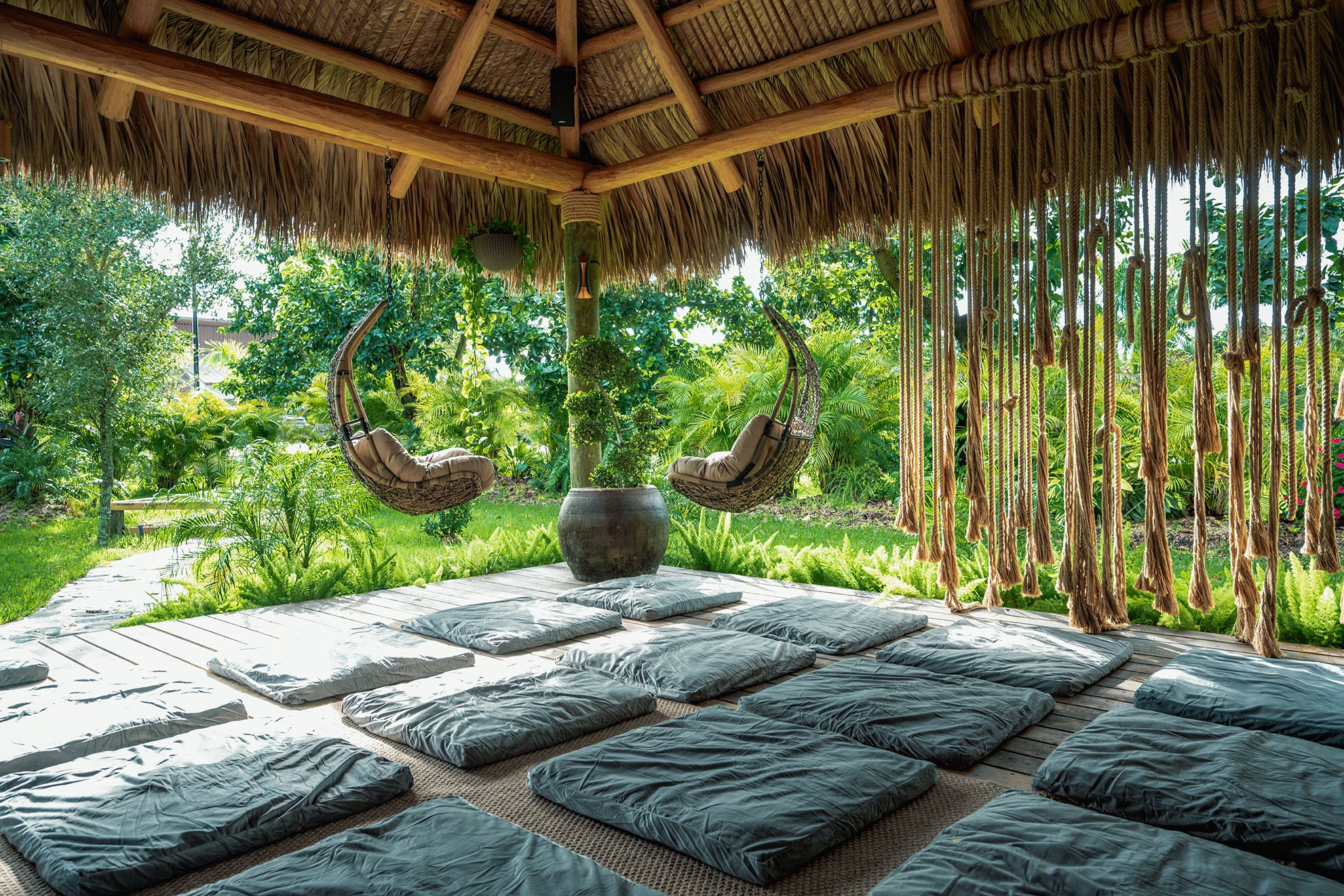
Why Resorts Stopped Working for Serious Wellness
Resorts were designed for scale. That’s their strength as hotels — and their ceiling as wellness destinations.
The friction shows up in subtle ways:
Spa appointments stacked on top of other guests’ appointments
Pool decks shared with bachelorette parties and stroller traffic
Music in every corridor, soft but constant
Staff turnover is so high that your name resets every meal
“Wellness packages” optimized for revenue, not your nervous system
Even the best resorts in South Florida still operate as hotels first and sanctuaries second. The result is a wellness experience that depends on the guest’s ability to filter — to ignore the noise around the calm.
That filtering is a tax. And in 2026, travelers are no longer willing to pay it.
The Case for the Private Estate
A private estate flips the equation. Instead of carving out wellness inside a busy property, the entire property becomes the program.
There are no overlapping bookings. No surprise sounds from the next building. No menu compromises for a thousand guests. The estate adapts to one group at a time, which means the rhythm of the day — meals, movement, silence, rest — can be designed around what the group actually needs, not what the operations team can deliver at volume.
In wellness design, this is what “hushpitality” refers to: silence and stillness treated as the actual product, not as a backdrop. Private estates were built for it.
The estate model also opens a door that resorts cannot: complete control over who is on the property. For executive wellness, couples’ retreats, fertility retreats, postpartum retreats, recovery weeks, and family wellness gatherings, that level of containment isn’t a luxury — it’s a clinical requirement.
What to Look For in a Wellness-Ready Private Estate
Not every private estate is built for wellness. The ones that share a clear pattern.
Real nature. Working land, mature trees, water features — not landscaped buffer zones around a parking lot.
A dedicated spa environment. Cold plunge, sauna, hot tub, and treatment space integrated into the property rather than retrofitted.
Room to move. Trails, courts, open lawns, and shaded outdoor spaces for movement, breath, and group work.
Multiple living spaces. Suites, cabins, and gathering rooms that allow people to be alone and together inside the same property.
Distance from urban noise. Far enough from highways and flight paths that the body can register quiet, close enough that arrivals stay simple.
In South Florida, that combination is rarer than it sounds. Most properties marketed as retreats are hotels with a steam room. A handful are designed from the ground up around the experience.
Why South Florida Is Especially Suited for Private Estate Wellness
South Florida’s climate gives private estates a programming advantage no northern retreat can match. Outdoor movement, ice baths after sun exposure, sunrise practices, and open-air meals work year-round. There is no slow season for the body.
The geography also matters. Within an hour of Miami International Airport, guests can be on a working agricultural estate surrounded by tropical trees, fresh water, and silence. Few wellness markets in the country offer that compression of access and seclusion.
For East Coast guests in particular, the math is simple: a private estate near Miami delivers what a flight to Costa Rica or Tulum used to require, without the recovery cost of the travel itself.
Why Casa Campo Homestead Sits at the Center of This Shift
Casa Campo Homestead is one of the South Florida properties built around exactly this model. It’s a private avocado estate just south of Miami, designed for a single group at a time.
The wellness infrastructure is integrated, not bolted on. Palm Haven Spa anchors the experience with a cold plunge, sauna, hot tub, hydro-massage table, and dedicated treatment space. Outside the spa, the property unfolds: a zen garden, a chapel, trails through the avocado grove, a lookout tower, freshwater lakes, soccer and paddle courts, and open lawns for outdoor practice. The main house holds gathering rooms — cinema, gym, lounges, a chef’s kitchen — and the cabins and guest house allow groups to break apart and come back together without ever leaving the estate.
What makes it work as a wellness setting isn’t any single feature. It’s that the entire property runs on private buyout, so the rhythm of the retreat — silence at sunrise, breakfast outdoors, movement, treatments, communal dinner, fire — is never interrupted by another guest.
That continuity is the actual wellness benefit. Everything else is amenities.
The New Definition of a Wellness Retreat
In 2026, a wellness retreat is no longer defined by the spa menu. It’s defined by what surrounds the spa.
Privacy, nature, and full ownership of the space have moved from premium upgrades to baseline requirements. Resorts will continue to host wellness programming — but for guests who came specifically to reset, recover, or be alone with the people they trust, the private estate has already become the standard.
The shift isn’t loud. It rarely is. But the people doing the most serious wellness work in South Florida this year are doing it on private land — and they’re not going back.
FAQ
Q: What is a private estate wellness retreat? A private estate wellness retreat is a wellness experience hosted on a single privately owned property booked for one group at a time, with no other guests on site. Unlike a resort retreat, the entire environment — meals, spaces, programming, and pace — is built around a single group, which is why private estates are increasingly considered the standard for serious wellness work in 2026.
Q: Where is the best location for a wellness retreat near Miami? The best location for a wellness retreat near Miami is south of the city, in the Homestead and Redland area, where private estates sit on working agricultural land, with a year-round climate, full privacy, and quick access to Miami International Airport. Casa Campo Homestead is one of the leading nature-first estates in this region.
Q: What features should a wellness retreat venue have in 2026? A wellness retreat venue in 2026 should offer full property privacy, integrated spa facilities (cold plunge, sauna, hot tub), real nature with mature trees and water features, multiple gathering and resting spaces, and a setting far enough from urban noise that the nervous system can register quiet.
Q: Why are private estates replacing resorts for wellness retreats? Private estates are replacing resorts for wellness retreats because resorts are designed for scale and shared use, which interrupts the silence, continuity, and personalization that serious wellness work requires. Private estates host one group at a time, which removes the friction guests pay for at resorts.